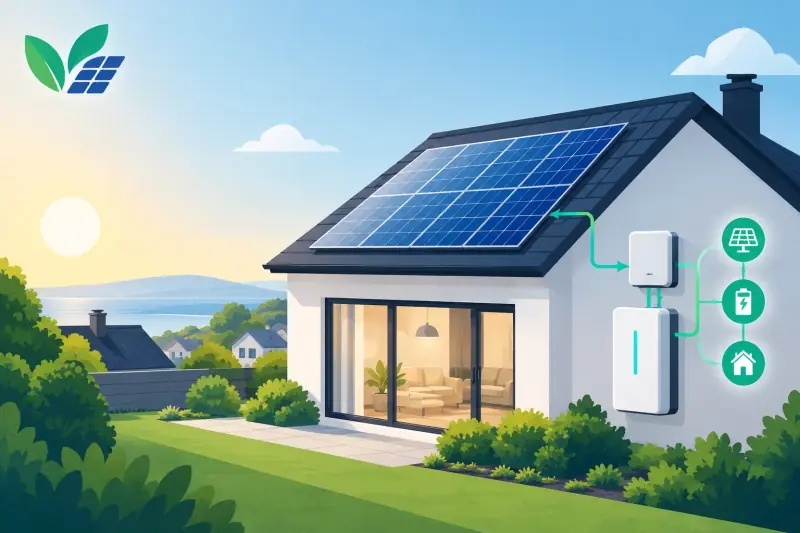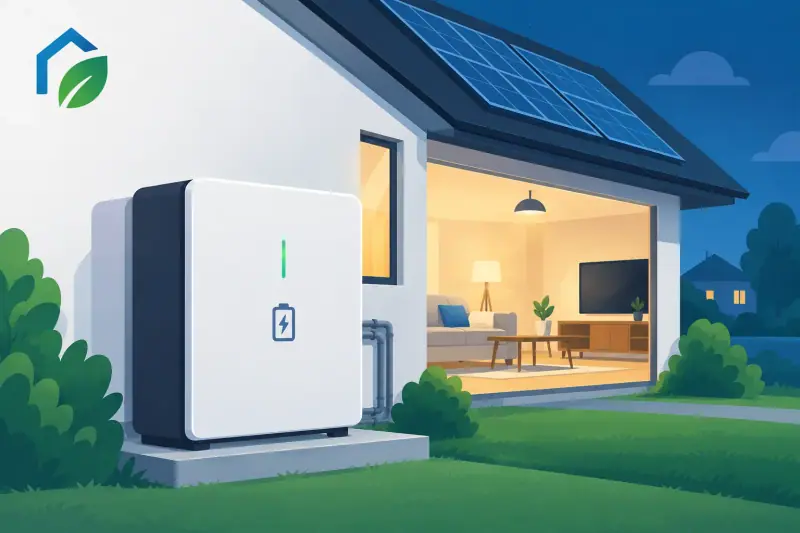
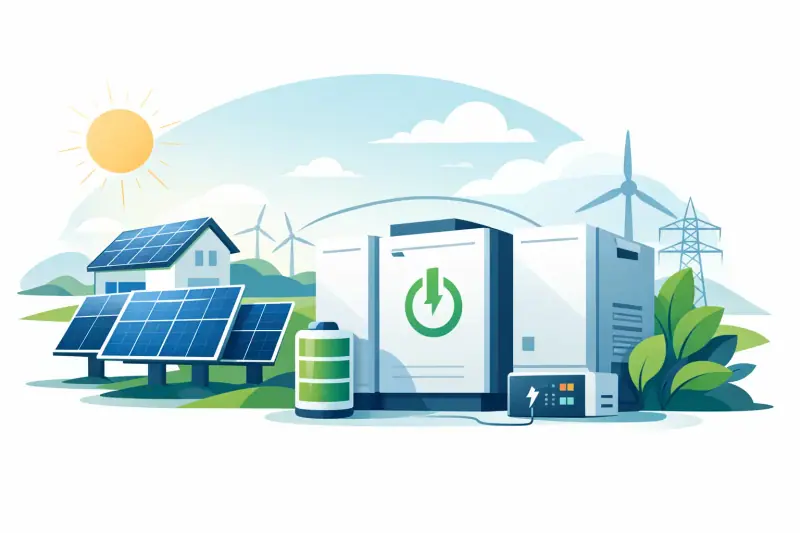
If your solar panels are generating most of their power in the middle of the day, but your busiest hours at home are early morning and evening, there is an obvious gap. Battery storage systems for solar power are designed to close it, helping you keep more of the electricity you generate instead of exporting it and buying it back later at a higher rate.
For many UK homeowners and business owners, that is where solar starts to feel less like a nice idea and more like a smart investment. A well-matched battery can improve self-consumption, reduce reliance on the grid and give you more control over when and how you use electricity. It is not the right choice for every property, but in the right setup it can make a noticeable difference to savings and day-to-day energy resilience.
What battery storage systems for solar power actually do
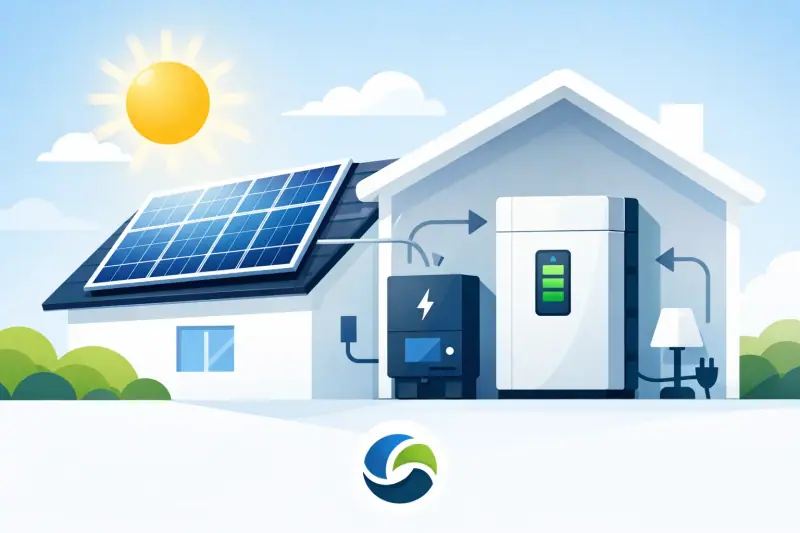
Solar panels produce electricity when the sun is available, not necessarily when your property needs it most. Without a battery, any surplus power is usually exported to the grid. With battery storage, that extra energy is stored for later use.
In practical terms, this means your home or business can draw on stored solar energy in the evening, during cloudy periods or when electricity prices are higher. Some systems can also charge from the grid at off-peak times, which can be useful if you are on a time-of-use tariff. That said, whether this makes financial sense depends on your tariff, your usage pattern and the size of the battery.
A battery does not replace your grid connection in most cases. It works alongside your solar system and the grid, helping you use more of your own generation first. Think of it as adding flexibility to an already efficient setup.
Why more UK property owners are adding battery storage
The appeal is straightforward. Energy prices remain a concern, and many people want better visibility and control over what they spend. Solar already reduces imported electricity, but battery storage can push that benefit further by shifting your energy use into the hours that matter most.
For homeowners, that often means running lighting, appliances and heating controls in the evening using stored solar rather than grid electricity. For businesses, it can help manage daytime peaks, improve the value of on-site generation and support more predictable operating costs.
There is also a practical peace-of-mind factor. People like knowing that the power generated on their roof is being used on their property rather than sent away unnecessarily. It supports the wider goal of energy independence, even if complete off-grid living is not the aim.
Is a battery always worth it?
Not always, and any installer who says otherwise is oversimplifying it.
The value of a battery depends on how much excess solar you generate, when you use electricity, what tariff you are on and how long you plan to stay in the property. A household that is empty most of the day and uses more electricity in the evening may benefit more than one that already consumes most of its solar output as it is generated. The same principle applies to commercial sites, where the load profile matters just as much as annual usage.
Battery size matters too. Bigger is not automatically better. An oversized battery may leave capacity sitting unused for long periods, while an undersized one may fill and empty too quickly to deliver the savings you expect. The best results usually come from careful system design rather than choosing the largest unit available.
Choosing the right battery size for your property
This is one of the most important parts of the decision. A battery should be matched to both your solar generation and your electricity habits.
If your solar array is relatively modest and your daytime usage is already high, a very large battery may not make sense because there may not be enough spare generation to charge it regularly. On the other hand, if you have strong daytime generation and significant evening demand, a larger storage capacity could be justified.
For UK homes, the right answer often sits in the middle. The goal is usually to store enough surplus energy to cover meaningful usage later in the day, without paying for capacity you rarely need. For commercial systems, sizing can be more complex because demand patterns vary across sectors, opening hours and equipment loads.
This is where a proper site survey and usage review make a real difference. Good battery recommendations should come from actual consumption data, not guesswork.
What to look for in battery storage systems for solar power
The headline figure most people notice is battery capacity, but it is only one part of the picture. Usable capacity is more relevant than the advertised total, because that tells you how much electricity can actually be drawn from the battery in normal operation.
You should also consider power output, which affects how many appliances or systems the battery can support at once. Warranty terms matter, particularly the expected cycle life and performance retention over time. Monitoring is another key feature. A good app or portal makes it much easier to understand your generation, storage and import patterns.
Installation quality matters just as much as product choice. A battery system needs to be integrated properly with the solar array, inverter and property electrics. That is why many customers prefer working with an MCS-certified installer that can manage the full process clearly, from design through to commissioning and aftercare.
Retrofit or install alongside new solar?
Both options can work.
If you are installing solar for the first time, adding battery storage at the same stage is often the most efficient route. The system can be designed as one package, which tends to make integration cleaner and easier to manage.
If you already have solar panels, retrofitting a battery may still be a very good option. The main question is compatibility. Your existing inverter setup, generation profile and available space will all influence what can be added and how the system should be configured.
Retrofitting can be especially attractive for households that installed solar years ago without storage and now want to improve the value of the electricity they generate. A newer battery can often modernise an older solar setup without replacing everything.
Can a battery provide backup power?
Sometimes, but not by default.
Many people assume a battery means their property will keep running during a power cut. In reality, not all battery systems offer backup functionality, and those that do may only support selected circuits unless they are designed for whole-property backup.
If backup is important to you, this should be discussed at the design stage. Essential loads such as lighting, refrigeration, broadband or alarms can often be prioritised, but the exact setup depends on the battery, inverter and consumer unit arrangement.
This is a good example of why clear advice matters. The best system is not simply the one with the biggest battery. It is the one designed around how you want the property to perform.
The financial case: savings, payback and long-term value
Most buyers want a simple answer on payback, but battery economics are rarely one-size-fits-all. Savings come from using more of your own solar electricity, reducing peak-time imports and in some cases charging strategically on lower-rate tariffs.
The strongest returns usually come where there is a clear mismatch between solar generation hours and energy use. If you are exporting a lot during the day and importing heavily at night, storage can improve that balance. If your usage already lines up neatly with generation, the extra gain may be smaller.
There is also the wider value of predictability. For many property owners, the benefit is not only measured in strict payback terms. Greater control over energy costs, lower exposure to tariff changes and better use of on-site generation all carry weight in the decision.
Why professional design makes all the difference
Battery storage is not a plug-and-play add-on. The performance you get depends on the detail of the design, the quality of the installation and the support that follows.
That includes assessing your roof generation potential, understanding your usage profile, selecting compatible equipment and setting the system up so it behaves as intended. It also means explaining the trade-offs honestly. Some customers need maximum savings. Others care more about backup support, future EV charging or business continuity.
A full-service installer should be able to guide that decision clearly, without overcomplicating it. At Infused Solar Energy, that practical, start-to-finish approach is what helps customers feel confident they are investing in a system that suits the property rather than a standard package.
Battery storage works best when it solves a real usage problem. If your goal is to own more of the energy you generate, cut waste and make your solar system work harder for you after sunset, it is well worth exploring with proper advice and a design built around how you actually live or work.