A commercial solar system can look perfectly healthy from ground level while quietly losing generation. A failed inverter string, a loose connection or persistent shading may not stop production altogether, but it can steadily erode the savings your business expected. This guide to commercial solar maintenance explains how to protect performance, spot issues early and keep your investment working hard for the long term.
For most businesses, solar maintenance is not about constantly cleaning panels or adding unnecessary visits. It is about having clear visibility of system output, responding quickly when performance changes, and arranging professional checks at sensible intervals. The right approach depends on your system size, roof environment, age and the value of uninterrupted generation to your operation.
Why commercial solar maintenance protects your return
Solar panels have no moving parts, which makes them dependable, but they are part of a wider electrical system that does require attention. Inverters, isolators, cabling, mounting hardware, monitoring equipment and battery storage all need to operate correctly for the array to deliver the expected return.
Even a small fault can become expensive when left undetected. An inverter outage, for example, may mean a section of the system is producing nothing during the brightest weeks of the year. A damaged cable or deteriorating connection can create a safety concern as well as reducing output. Regular oversight gives your business the best chance of finding these problems before they affect a full quarter’s energy bill.
Good maintenance also supports better financial planning. When generation data is reliable, you can compare actual production with forecasts, understand how much electricity is being offset on site and make better decisions about operational energy use. If you are considering battery storage, accurate performance data is especially useful for sizing and planning that upgrade.
Start with monitoring, not guesswork
The most useful maintenance tool is usually the monitoring platform supplied with the installation. It should show daily, monthly and annual generation, and in many cases indicate the performance of individual strings or panels. Someone within your business should be responsible for checking it regularly, even if this is only a brief monthly review.
Look for a noticeable drop against comparable periods, rather than reacting to every variation. Generation naturally changes with the seasons, cloud cover and temperature. A warm, clear May will not look like a wet December. What matters is whether output is unexpectedly lower than the same period last year, your system forecast or neighbouring areas of the array.
Set alerts where your platform allows it. An alert for an inverter going offline or generation falling below an expected level can prevent a fault from sitting unnoticed. If monitoring has stopped reporting altogether, treat that as an issue in its own right. It may be a simple communications problem, but it removes your ability to verify system health.
Keep a simple performance record
A short record of alerts, faults, site visits and resolved issues makes maintenance easier over time. It helps a service engineer see recurring patterns and gives facilities teams a useful history when responsibilities change. Include inverter error messages, photographs of visible damage and the date any nearby construction, tree growth or roof work took place.
Routine visual checks your team can carry out
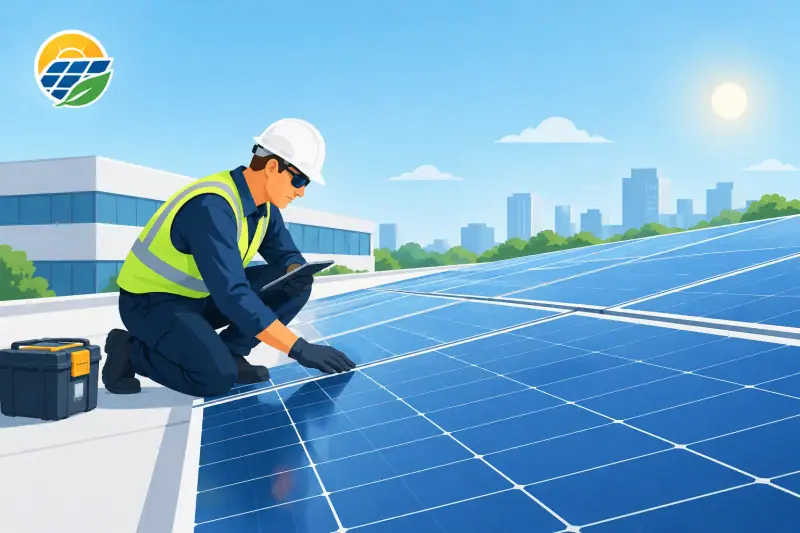
A visual inspection does not replace electrical testing, and roof access should never be attempted without appropriate training, risk assessment and safe access arrangements. From a safe position at ground level or through planned building inspections, however, your team can identify changes worth reporting.
Check for obvious new shading from trees, signage, plant equipment or nearby development. Look for dirt build-up where panels are beneath chimneys, close to busy roads, near agricultural activity or exposed to bird activity. Also note cracked glass, discolouration, loose-looking components, water staining around roof penetrations and any signs that pigeons are nesting beneath the array.
Inside the building, make sure inverter areas remain clear, dry and adequately ventilated. Do not stack stock or cleaning materials around equipment. Inverters generate heat during operation, and restricted airflow can contribute to overheating or shorter component life.
If you notice damage, burning smells, unusual noises, repeated inverter warnings or an electrical enclosure that appears compromised, do not investigate internally. Isolate the area only where your site procedures make this safe and contact a qualified solar maintenance provider promptly.
Does a commercial solar system need cleaning?
Not always. In the UK, regular rainfall often removes ordinary dust and light surface dirt. Cleaning panels on a fixed schedule without evidence of soiling can add cost without creating a meaningful gain in output.
There are exceptions. Businesses near coastlines, industrial sites, farms, major roads or areas with heavy bird fouling may see deposits that rain cannot clear effectively. Flat or low-pitched arrays can also hold dirt more readily. If monitoring suggests a gradual performance reduction and a visual inspection confirms soiling, a professional clean may be worthwhile.
Avoid harsh chemicals, abrasive tools and high-pressure washing. These can damage panel surfaces, seals or the roof itself. Cleaning must also be planned around safe roof access and the manufacturer’s guidance. The decision should be based on measured loss and site conditions, not the assumption that cleaner-looking panels always generate significantly more.
Schedule professional servicing at the right interval
A planned annual inspection is a sensible starting point for many commercial systems. Higher-risk environments, larger portfolios, older systems or sites where downtime has a substantial financial impact may benefit from more frequent checks. Your installer or maintenance partner can recommend an interval that reflects the equipment and operating conditions.
A professional service should assess both performance and safety. It will typically include a review of monitoring data, inverter operation, visible panel condition, mounting and roof fixings, cable routes, electrical enclosures, isolators and earthing arrangements. Electrical testing may be required where the inspection identifies concerns or where it forms part of the agreed maintenance plan.
For systems with battery storage, maintenance should also cover battery status, ventilation, connection integrity and software or firmware requirements. Batteries are valuable tools for using more of your own solar electricity, but they need to be managed as part of the complete energy system rather than treated as a separate add-on.
Ask for a clear service report after each visit. It should explain what was inspected, any faults found, work completed, recommendations and any parts that may need attention in future. That clarity makes it easier to approve work quickly and maintain an audit trail for the building.
Plan around roof work and site changes
Many avoidable solar issues happen when other work takes place on the property. Roofing repairs, air conditioning installation, scaffold erection, signage, drainage work and telecoms upgrades can all affect an array or its cabling if they are not planned carefully.
Tell contractors that solar is installed before they begin work. They should not use panels as a walkway, lean equipment against them, disconnect equipment or alter cable routes without approval. If panels need to be removed for roof repairs, use an experienced solar team to isolate, remove and reinstall them correctly. This protects the equipment, roof warranty and electrical safety of the system.
The same principle applies to landscaping. A tree that was harmless at installation can become a significant source of shade within a few years. Pruning should be considered carefully, with permissions observed where relevant, but proactive management can preserve generation without compromising the appearance of the site.
Know when performance loss needs urgent action
Some reductions in output can wait for a planned visit. Others should be treated as urgent. Contact a qualified provider promptly if monitoring shows zero generation during daylight hours, an inverter is repeatedly tripping, an error code persists after basic approved checks, or there is visible damage to electrical equipment.
You should also act quickly after severe weather, roof damage, flooding near electrical components or any work that may have disturbed the array. A timely inspection can limit lost generation and help establish whether a warranty or insurance claim may be needed.
Keep key documents accessible: system design information, commissioning records, equipment warranties, monitoring logins, maintenance reports and the contact details of your installer. This saves time when the person who originally managed the project is no longer available.
Choosing a commercial solar maintenance partner
The lowest call-out price is not always the lowest cost over the life of the system. Look for a provider that understands commercial installations, can interpret monitoring data and communicates clearly about what is necessary now versus what can be planned for later.
A good maintenance partner should explain scope before attending, use appropriately qualified engineers and provide evidence of findings rather than vague recommendations. They should also understand that a business needs practical scheduling, safe site procedures and straightforward updates for facilities managers or directors.
At Infused Solar Energy, our approach is built around end-to-end support, from system design and installation through to monitoring and aftercare. That continuity helps businesses protect the value of their solar investment without being passed between multiple providers.
Commercial solar should feel like a dependable part of your building, not another asset that demands constant attention. With monitoring reviewed, professional servicing planned and changes on site managed carefully, your system can keep reducing purchased electricity for years to come.