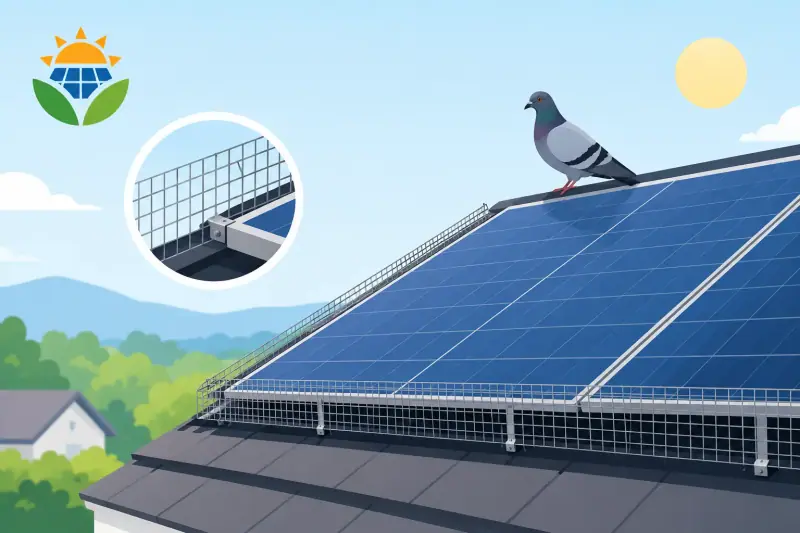
Pigeons beneath a solar array can turn a quiet roof into a surprisingly expensive maintenance issue. Solar panel bird proofing prevents birds from nesting in the sheltered gap between your panels and roof, helping to protect the system, the roof space below and the performance you expect from your investment.
For many UK homeowners, the first sign is not a visible nest. It is persistent scratching, cooing at dawn, droppings on the patio, or debris collecting in the guttering. Left alone, a small nuisance can become a recurring problem that affects cleaning, maintenance access and, in some cases, electrical safety.
Why birds choose the space under solar panels
Solar panels create a dry, raised and relatively protected area. It is shielded from wind and rain, retains warmth, and is difficult for larger predators to reach. For pigeons in particular, it can be an ideal nesting site.
The issue is rarely that birds are sitting on the panels themselves. The concern is what builds up underneath them. Nesting material, feathers and droppings can collect around cables, beneath panel edges and in roof gutters. This can trap moisture and make routine inspections more difficult.
Bird activity may also affect the appearance of your property. Droppings can mark panels, roof tiles, fascias, paths and vehicles below. On commercial premises, where a clean and professional exterior matters, this can become particularly frustrating.
What can happen without bird proofing?
A few birds visiting a roof does not automatically mean your solar system is at risk. However, regular nesting beneath the array is a different matter. The longer it continues, the more likely you are to face avoidable maintenance costs.
Nesting debris can restrict drainage routes and contribute to blocked gutters. It may hold damp material against parts of the roof and create unpleasant odours around loft spaces or upper rooms. Bird droppings can also obscure sections of the panels, reducing the amount of sunlight reaching the cells. While a light layer of dirt is unlikely to cause dramatic losses overnight, repeated soiling can reduce generation over time.
There is also the practical question of electrical cabling. Solar cables are designed for outdoor conditions, but they should not be left surrounded by nesting material or subject to repeated disturbance. A professional inspection can check that cables, clips and connections remain secure and accessible.
The cost of doing nothing depends on the scale of the problem. Some properties need only a clean and a simple exclusion measure. Others may require safe removal of old nesting material, gutter clearance, panel cleaning and a more detailed system check. Acting early is usually the simpler option.
How solar panel bird proofing works
The most effective approach is usually a purpose-made mesh fitted around the perimeter of the solar array. The mesh closes the gap between the panels and roof, preventing birds from getting underneath while still allowing ventilation and drainage.
A properly fitted system should be secured to the panel frame with appropriate clips rather than drilled into the panels. Drilling can damage equipment, compromise warranties and create unnecessary risk. The mesh should be colour-matched where possible, neatly cut around roof features and installed so it does not flap in the wind or create a visible mess from ground level.
Bird proofing is not about trapping or harming birds. It is an exclusion measure that stops new nesting access. Where birds are already active beneath panels, the work must be planned carefully and responsibly.
Timing matters when nests are active
Wild birds, their nests and eggs are protected by law in the UK. An active nest must not be damaged, destroyed or obstructed. If eggs or chicks are present, bird proofing may need to wait until the nest is no longer active.
This is one reason a professional assessment is worthwhile. The installer can identify whether the problem is old nesting material, occasional roosting or active nesting, then recommend an appropriate next step. Responsible work protects your property without disregarding wildlife legislation.
Signs your panels may need bird proofing
You do not need to wait until a large nest is visible to take action. Arrange an inspection if you notice several of the following signs:
- Regular pigeon activity around the same area of the roof, especially early in the morning or at dusk.
- Cooing, scratching or fluttering sounds from beneath the panels or in the loft.
- Feathers, twigs or nesting material appearing in gutters and around the edge of the array.
- Repeated droppings on the roof, patio, windows, driveway or the panels themselves.
- A drop in generation that cannot be explained by season, weather or normal shading.
Generation figures alone are not a reliable way to diagnose bird activity. Output changes naturally throughout the year, and shading, dirt or equipment faults can have similar effects. Monitoring data is useful, but it should be considered alongside a visual system check.
Is bird proofing worth it for every solar system?
Not always. Some roofs are simply less attractive to nesting birds, particularly where panels are close to the roofline, the property has little pigeon activity or the installation has already been protected. If there are no signs of birds getting underneath the array, preventative proofing may be a sensible future option rather than an urgent expense.
It is more likely to be worthwhile if your home is near busy town centres, railway lines, food premises, open car parks, farms or coastal areas where pigeon and gull activity is common. Roof design can also make a difference. Larger arrays, shallow-pitched roofs and panel layouts with accessible edges may offer birds more entry points.
For commercial property owners, the decision often comes down to risk management. A bird problem on a larger solar array can mean more widespread cleaning, more difficult access and greater disruption to site operations. Early protection can help keep planned maintenance predictable.
Why professional fitting is the safer choice
It can be tempting to treat bird proofing as a simple DIY task, but working around solar panels and at height brings obvious risks. Panels, roof tiles and electrical components all need careful handling. Poorly installed mesh can loosen in high winds, leave gaps for birds to re-enter, scratch the panels or make future maintenance harder.
A qualified solar professional can assess the roof safely, check the condition of the array and fit compatible materials without altering the panel structure. If cleaning or maintenance is required first, that work can be coordinated in the correct order rather than masking an existing issue.
At Infused Solar Energy, our approach to ongoing solar care is based on protecting the full system, not simply treating one visible symptom. A clean, secure array is easier to inspect, easier to maintain and better positioned to deliver dependable generation for years to come.
Questions to ask before booking the work
Before choosing a contractor, ask whether they have experience working specifically around solar PV systems, how they will attach the mesh, and whether they will inspect cables and panel edges during the visit. You should also ask what happens if active nesting is found and whether the price includes removal of old debris, cleaning or gutter clearance.
Be cautious of anyone who proposes drilling into the panels or rushing work around an active nest. The right solution should protect the array, respect wildlife requirements and leave the roof looking tidy from the ground.
Bird proofing will not make electricity on its own, but it can protect the conditions that help your solar investment keep performing as intended. If your roof has become a regular pigeon stop, dealing with it promptly is a practical way to preserve your panels, your property and your peace of mind.